
Most of us are familiar with brands, they are the popular names we know. Some times they are the companies that did the research and development (like drug companies), and some times they are the company that put their own twist on a general concept (like computer companies).
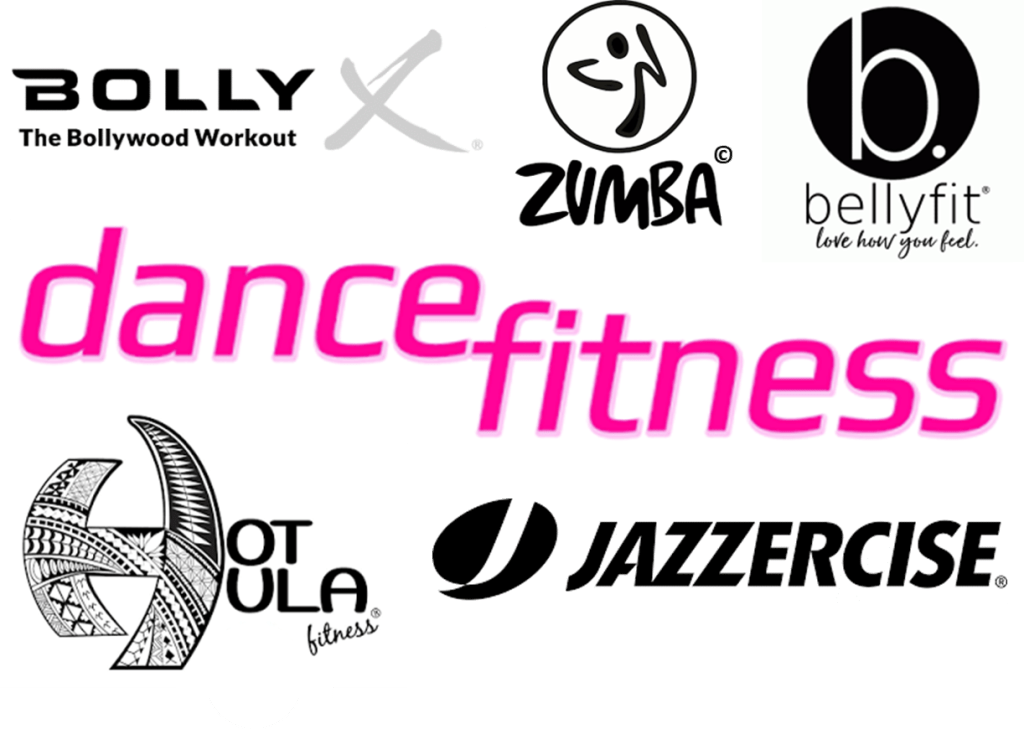
The same is true for fitness classes and concepts. You have the general concept of “dance fitness” and then you also have the branded classes such as Zumba® (and all its spin-offs), Jazzercise®, Bolly-X®, Hot Hula®, and Bellyfit®. All of the brands are rhythm focused. While Zumba® is Latin rhythm focused, it is also a different type of format (intermittent intensity) when compared to the others which follow the traditional aerobics intensity pattern (a bell curve).
To promote and teach a branded class all you need to do is complete the 1-day training session, then pay the annual licensing fees. That’s it. If an instructor drops their license, they can no long teach group fitness classes unless they are certified.
A non-branded “dance fitness” class is taught by a certified group fitness instructor. A certified group fitness instructor has to complete a course and pass exams (including a live demo) under the governance of an independent governing body. Once certified, the instructor can become a member of the governing body by paying an annual fee and they must recertify in CPR and take fitness-related courses as mandated.
While both type of programs strongly recommend music licenses and liability insurance, they are not required to teach.
Since fitness is not federally regulated, it is important to check on your instructor’s qualifications. Dancers, dance instructors, gym teachers, and/or personal trainers are not qualified to instruct a group fitness class.
As shown on my Credentials page I was previously licensed to lead Zumba® and Zumba Gold® classes. This opened the door to me becoming a certified group fitness instructor. After 10 years, Zumba® and I were headed in different directions. Zumba’s new music and programs were not adaptable for those with knee/hip problems, and I wanted to focus on safe classes for active adults, especially those with knee/hip replacements. My classes still follow the intermittent intensity format but are more customized to the needs and wants of my class participants. Dropping the licensing fee allowed me to keep classes affordable.
Updated: July 2026
 KIWA dance fitness