We have all heard the saying “use it or lose it,” but does it apply to muscle? In the fitness industry they talk about losing muscle as we age, but are we actually losing muscle or is it just sleeping?
There are 2 types of muscle loss:
- Atrophy results from prolonged inactivity. This is sleeping muscle as there is no loss of muscle fibers, only shrinkage in the size of the fibers which can be reactivated and rebuilt through a progressive training program.
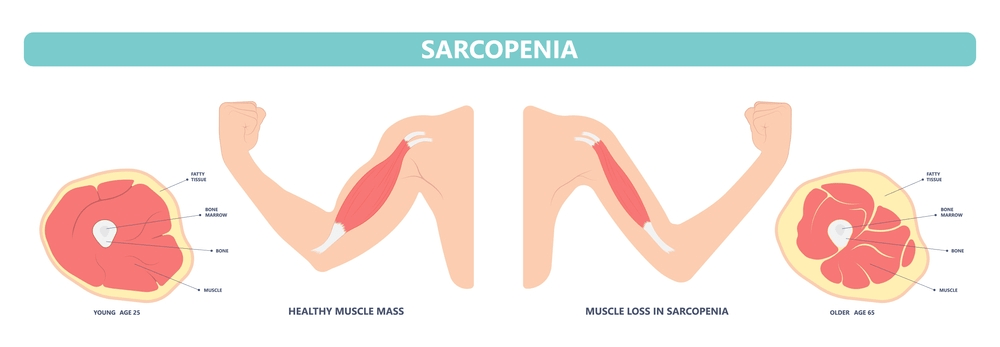
- Sarcopenia results from natural aging and is a combination of the loss of the number of muscle fibers and shrinkage of the muscle fibers in size. This is true muscle loss where the lost fibers are replaced with a tough, fibrous tissue (similar to scar tissue). Right now, fiber loss is irreversible; however, early studies are showing promise with a new drug for cystic fibrosis which has the potential to rebuild and make new muscle fibers.
While lost fibers cannot be found, we can slow the loss of fibers and decrease fiber shrinkage through exercise/training, diet, and sleep.
- Aerobic exercise: Not just heart friendly, the right amount/intensity of aerobic exercise builds muscle. Current studies are showing that aerobic exercise is just as effective as resistance training in building/rebuilding muscle.
- Resistance training: Should include all muscle groups and options include resistance bands, weights, or body-weight exercises.
- Adequate protein intake (approximately 5 g per 10 pounds of body weight). Your daily protein intake should be spread over all meals to optimise utilization by the body. For the best sources of protein, especially essential amino acids, you should consult an independent expert qualified in nutrition for older adults.
- Sleep: You need 7-9 hours of sleep every night rebuild and regenerate muscle tissue that has been used/damaged during your daily activities.
So, now we know. Age-related muscle loss is not reversible but controllable. If we do what we can to slow the progression, we can increase our ability to live independently and pain free while reducing our risk of falls. That’s a BIG WHOOP WHOOP people.
PS: Dance fitness is a body-weight and aerobic exercise.
 KIWA dance fitness